
Complete guide to high-pressure injection waterproofing: Principles, material selection, and practical leak repair
Wall seepage and basement leaks are frustrating not only because they happen once, but because they often return even after repairs. One area is fixed today, yet water may appear from another location later, making people wonder whether the problem can ever be solved completely.
In many cases, water leakage is difficult to repair because the actual problem is not on the surface. Water often travels slowly through fine cracks, pores, construction joints, or gaps inside the concrete structure. This means the visible water stain is often only the point where the water finally emerges, rather than the true source of the leak.
This is why applying waterproof coatings or sealing visible surface cracks may seem effective at first, but the leakage can return after a short period. The internal water path still exists, so surface treatment only hides the symptom temporarily without addressing the actual cause.
In these situations, one of the most common and efficient methods used on construction sites is high-pressure injection waterproofing. It is often referred to as “injection repair” because the process is similar to injecting material into cracks to block the water path from inside the structure.
What is high-pressure injection waterproofing?
High-pressure injection waterproofing is a repair method that uses specialized equipment to inject waterproofing or structural repair materials under pressure into concrete cracks, voids, and construction joints. The injected material travels into the internal structure and fills the channels through which water passes.
Imagine that the leakage is caused by invisible water channels inside a wall. High-pressure injection does not simply add another protective layer to the outside. Instead, it fills and seals the water channels within the wall itself. Once these internal passages are blocked, water is much less likely to penetrate the structure again.
This is the main difference between high-pressure injection and conventional surface waterproofing. Surface waterproofing is similar to placing a raincoat over the wall, while high-pressure injection directly repairs the internal cracks and voids. For recurring leaks, basement negative-side seepage, and cracks with active water flow, injection repair is often more effective than surface treatment alone.
Why is high-pressure injection more effective than surface waterproofing?
Many people assume that repainting the wall with a waterproof coating is enough to solve water seepage. This method can be useful for minor surface-level issues where there is no continuous water pressure.
However, serious leakage problems in basements, exterior walls, wall corners, and construction joints usually involve water movement inside the concrete. When only the surface is sealed, the water does not disappear. It may simply move through another crack or void and find a new exit point.
In other words, surface waterproofing treats the visible leak location, while high-pressure injection addresses the actual path through which the water is moving. As long as the internal water path remains open, leakage may reappear in another location.
High-pressure injection is more effective because it delivers repair material directly into the structure and treats the core of the problem. For long-term and recurring leakage, this is not simply an additional protective layer, but an entirely different repair approach.
What are the advantages of high-pressure injection?
High-pressure injection is widely used in leak repair projects not only because of its effectiveness, but also because it offers practical benefits in many construction environments.
1. Deep sealing of internal water paths
The repair material does not remain on the surface. Pressure forces it into fine cracks and internal pores, increasing the likelihood of fully sealing the water passage.
2. Suitable for active water leakage
Some injection materials react and expand when they come into contact with water, allowing them to fill active cracks. This is why high-pressure injection is commonly used for basement leaks, wall seepage, and areas exposed to negative-side water pressure.
3. Less demolition and surface damage
In most cases, only a series of small holes need to be drilled around the crack before injection packers are installed. The entire wall does not necessarily need to be removed or rebuilt. This is especially beneficial in finished interiors or facilities that must remain operational during repairs.
What materials are commonly used for high-pressure injection?
Material selection is one of the most important factors in a high-pressure injection project. Different leakage conditions require different materials. Even with careful workmanship, using the wrong material may lead to unsatisfactory results.
The two most common injection materials are PU foaming waterproofing materials and epoxy resin. The following table summarizes their main differences:
| Comparison item | PU foaming waterproofing material | Epoxy resin |
|---|---|---|
| Suitable conditions | Active water leakage and continuous seepage | Structural cracks without obvious active leakage |
| How it works | Reacts with water and expands to fill cracks | Cures into a rigid, high-strength material that bonds the structure |
| Main purpose | Water stopping and waterproofing | Crack repair and structural reinforcement |
| Material characteristics | Flexible and able to accommodate slight movement | Rigid with strong adhesion and structural strength |
| Common applications | Basement seepage, wall leakage, and leaking construction joints | Beam cracks, column cracks, floor slab cracks, and concrete reinforcement |
How is high-pressure injection performed?
Although high-pressure injection may appear complicated, the basic process follows a clear and logical sequence.
Step 1: Inspect the leakage and crack conditions
Before work begins, the contractor must identify the possible source of the leak, the direction of water movement, and the condition of the cracks. The visible water stain may not be the best injection point. Experienced technicians evaluate where the water enters, how it travels, and whether the crack involves a structural issue.
Step 2: Drill holes and install injection packers
After the appropriate locations are identified, holes are drilled around the crack at suitable angles and intervals. Injection packers are then installed. These packers serve as entry points for the injection material.
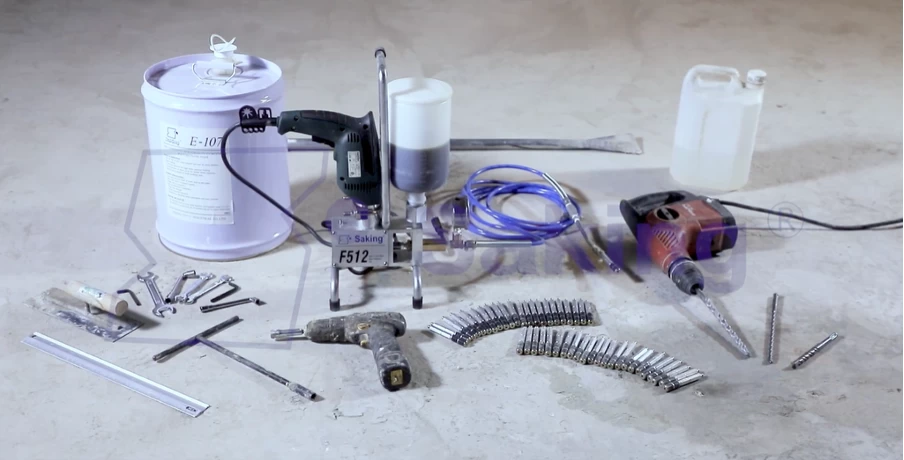
Step 3: Inject the material with a high-pressure grouting machine
A high-pressure injection grouting machine is used to force the repair material through the packers and into the internal structure. When the material begins to spread along the crack and appears from nearby holes or fine openings, it usually indicates that the material has entered the original water path.
Step 4: Allow the material to react or cure
Depending on the material used, it will expand, foam, or harden inside the crack. This reaction fills internal voids and forms a waterproof seal.
Step 5: Remove the packers and repair the surface
After the injection material has reacted or cured, the packers can be removed and the drill holes can be repaired and finished.
Although the process may look like simply “injecting a few points,” the actual performance depends on accurate diagnosis, correct material selection, proper pressure control, and stable equipment output.
High-pressure injection equipment video: Watch the high-pressure grouting machine application video
Why does leakage sometimes return after high-pressure injection?
If water leakage returns after injection, it does not necessarily mean the method itself is ineffective. In many cases, the problem is caused by incorrect material selection, improper pressure control, or changing structural conditions.
The injection material does not match the leakage condition
For example, if a crack has active water flow but the selected material is not designed for water stopping, the internal water path may not be sealed effectively.
The injection pressure is insufficient or unstable
If the material is not delivered deep enough into the crack and only fills the area near the surface, the repair may appear complete even though the main water path remains open. Leakage may therefore return later.
New cracks develop in the structure
Buildings may develop new cracks due to aging, vibration, earthquakes, thermal expansion, settlement, or other structural changes. In these situations, the original repair may still be effective, but the water has found a new path.
Professional injection repair should therefore involve more than simply injecting wherever water is visible. The overall crack distribution, structural condition, and possible water flow paths should also be evaluated.
Why is stable injection pressure so important?
Many people focus only on the injection material, but the equipment is equally important. High-pressure injection is not just about forcing material into a crack. The material must be delivered steadily and accurately into the correct location.
If the injection pressure fluctuates, the material may spread unevenly. Some areas may be filled properly, while others remain incomplete. The leak may appear to stop temporarily, but unfilled areas may begin leaking again under continuous water pressure.
This is why professional contractors place strong emphasis on equipment stability. Consistent injection pressure allows the material to penetrate cracks more evenly and improves the reliability of the waterproofing result.
SAKING’s construction application solutions are designed with this requirement in mind. Stable pressure output and precise control help reduce uneven injection and improve on-site operating consistency. In practical repair work, equipment stability affects not only ease of operation, but also long-term performance and the risk of rework.
What types of leakage are suitable for high-pressure injection?
High-pressure injection is commonly used for the following conditions:
- Basement wall seepage
- Negative-side basement leakage
- Continuous water leakage at wall corners
- Leaking concrete construction joints
- Exterior wall crack seepage
- Localized leakage in floor slabs or walls
- Active water flow through concrete cracks
High-pressure injection is particularly suitable for basement and negative-side waterproofing conditions, where water pressure continuously pushes through the structure from the opposite side. In these situations, injection repair is often more effective than surface treatment alone.
Injection techniques may also be used for hollow tiles, localized wall separation, or other repair situations where internal voids need to be filled. However, the material and injection method should always be adjusted according to the actual site conditions.
Key factors in a successful high-pressure injection project
The success of high-pressure injection waterproofing depends not only on the selected material, but also on whether the material can be delivered steadily into the correct water path. In practical construction work, pressure control, material selection, crack assessment, and injection sequence often have a greater impact on the final result than the repair method alone.
SAKING provides complete high-pressure injection equipment and construction application solutions for basement seepage, structural cracks, and negative-side waterproofing. These solutions help contractors improve injection stability and achieve more consistent long-term leak repair performance.
To learn more about suitable injection methods for your project or receive recommendations for high-pressure grouting equipment, please contact SAKING for professional assistance.
Frequently asked questions about high-pressure injection waterproofing
Q1: Can high-pressure injection permanently stop water leakage?
If the crack is diagnosed correctly, the proper material is selected, and the injection process and pressure are well controlled, high-pressure injection can provide long-lasting results and effectively block existing water paths.
However, if the building continues to age, the structure shifts, or new cracks develop in the future, new leakage points may appear. A more accurate explanation is that high-pressure injection can effectively treat the current water path, while future performance still depends on the overall condition of the building.
Q2: Is high-pressure injection suitable for basement seepage?
Yes. Basement leakage is often caused by negative-side water pressure, where water gradually penetrates through the concrete structure rather than entering only from the wall surface.
Surface waterproofing alone may have limited effectiveness in these conditions. High-pressure injection delivers waterproofing material into internal cracks and water channels, making it a common solution for basement seepage.
Q3: Is surface waterproofing still necessary after high-pressure injection?
It depends on the site conditions. In some projects, surface repair or waterproof coatings are applied after the main water paths have been sealed to provide more complete protection.
However, the sequence is important. If the internal water path is not treated first, surface waterproofing alone may not prevent the leakage from recurring.
Q4: Should high-pressure injection always be performed by a professional contractor?
High-pressure injection involves more than simply pumping material into a wall. It requires crack assessment, material selection, drilling position, pressure adjustment, and proper injection sequencing.
Incorrect decisions in any of these areas may reduce the effectiveness of the repair and increase material waste or rework costs. For complex leakage or active water flow, the work should be handled by experienced professionals.
Update: 2026-07-10
Saking specialize in the manufacture of high pressure grouting machines, hardware tools, and leak-proofing materials.